
EBEL’s design heritage and a new sale agreement
The announced agreement to sell a majority stake in EBEL draws attention back to its archive. The 1977 Sport Classic, 1911 chronographs and Villa Turque reveal different sides of the heritage that a new chapter would inherit.
EBEL — A new chapter
A wave bracelet, mechanical chronographs and Villa Turque. The new sale agreement brings us back to the EBEL archive. Turkish narration and captions · 2 minutes 5 seconds.
Film: 1010 WatchClub. Source photographs and archival material: EBEL; Tim Vaux and James K (@waitlisted) / Phillips; Europa Star / EBEL, reproduced by Phillips; EBEL’s 2017 brochure, p.15. Detailed sources follow below.
The watch within the news
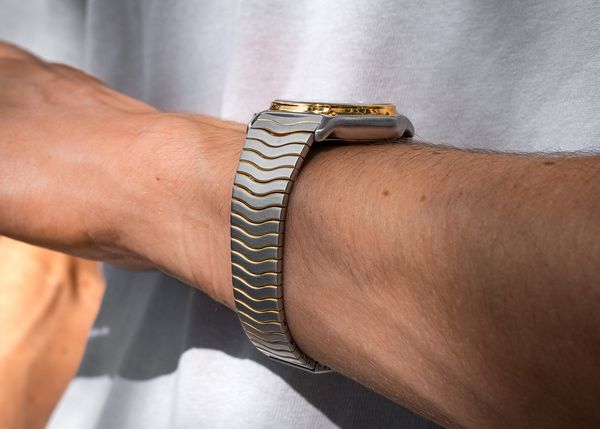
Look first at the bracelet in a photograph of an EBEL Sport Classic. Its wavy rows flow towards the case; on two-tone examples, the meeting of steel and gold makes the line easier to follow. You can recognise the watch before reading the small name on the dial. That is a good place to begin a return to the archive after the sale announcement.
On 8 October 2026, Movado announced a binding agreement to sell 95% of EBEL for approximately US$66.5 million. The buyer group is led by the F.P. Journe company Montres Journe SA, with Chanel and Pierre Jacques participating. Movado will retain 5%. The price is subject to adjustments, and closing to customary conditions; completion is expected in the coming months.
The curiosity stirred by the news is understandable. What interests us is how EBEL’s next chapter might engage with its own past. That answer has not yet appeared in new products. Looking at the watches already in front of us makes the question a little more tangible.
From a name to a design
EBEL was founded in La Chaux-de-Fonds in 1911 by Eugène Blum and Alice Lévy. Its name comes from Eugène Blum Et Lévy. Et means “and” in French: the founders’ partnership found a place in the name itself. The Federation of the Swiss Watch Industry’s history identifies the 1977 Sport Classic and its wave bracelet as a distinctive design milestone.
In the photograph, the bracelet shapes the whole appearance of the watch. Imagine replacing it with a straight-link bracelet. Even with the same case, the character would change. We think that immediately recognisable form is one reason the Sport Classic remains interesting today.
When examining a vintage example, it is worth considering bracelet and case together. The way light moves across their surfaces, the proportions of the parts and their original connection explain how the design works. Whether the watch is mechanical or quartz is a separate question. Answering one does not answer the other.
The age of a watch marked 1911
The 1911 collection was introduced in 1986, EBEL’s 75th anniversary year. The number 1911 on a dial or in a catalogue therefore cannot be read as the watch’s production date.
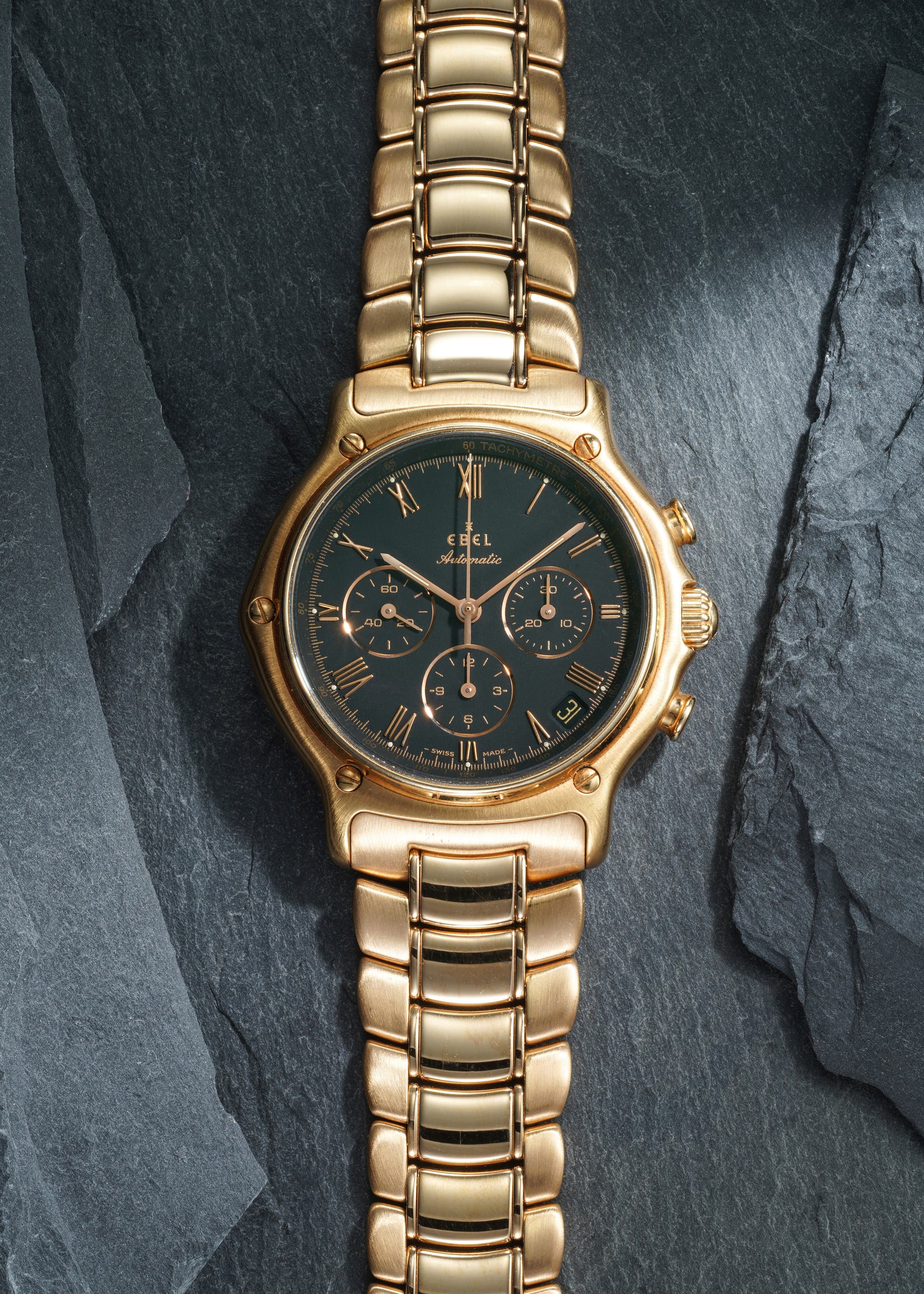
A black-dial, pink-gold ref. 5134901 dated by Phillips to the 1990s provides a concrete example. The catalogue records an automatic calibre 134; its essay connects the period’s 1911 chronograph with the Zenith El Primero. This bracelet differs from the Sport Classic’s wave design. That detail matters when describing similar-looking watches from the same brand.
Antiquorum’s record for a ref. 9134901, dated to circa 1988, names the El Primero 400 directly. These documents identify particular watches. We do not conclude that every EBEL chronograph uses the same movement.
A different movement appears later. Antiquorum records a Le Modulor example produced in 1995 with calibre 137. That lets us follow the mechanical history without reducing it to a single movement name. The records examined do not establish that every component of calibre 137 was made from scratch within the brand.
The connection with Villa Turque
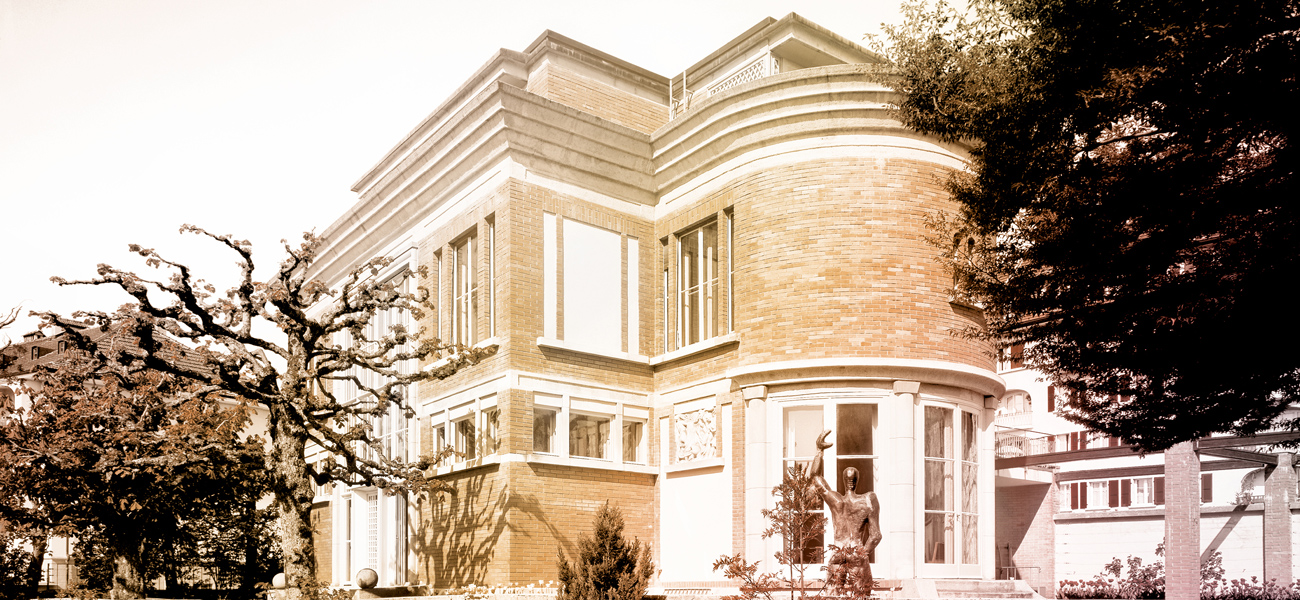
A photograph of a house belongs alongside the watches in the EBEL archive. Villa Turque, also known as Villa Schwob, is Le Corbusier’s 1916–1917 building in La Chaux-de-Fonds. The Fondation Le Corbusier records EBEL’s purchase of the house in 1986 and an extensive restoration in 1987–1988.
The building was not originally constructed as a factory for EBEL. Its connection with the watches came later. Interior photographs draw attention to the large windows and tall living space. Looking at this house after the watches suggests a different scale for the brand’s interest in design.
Looking at old watches afresh
This is not EBEL’s first change of ownership. On 1 March 2004, Movado announced that it had completed the acquisition of the brand from LVMH.
The new announcement does not introduce an EBEL model, movement or product timetable.
We think EBEL went without the collector attention it deserved for a long time. Could this news make us look again at old Sport Classics and 1911 chronographs? Will watches that have been in front of us for years suddenly look different? The watch is the same. Perhaps what changes is the way we see it.
Sources & further reading
This article was prepared for 1010 WatchClub using the sources below.
- Movado Group enters into agreement to sell majority interest in EBEL
- Ebel, le centenaire - Les Architectes du Temps ont 100 ans
- EBEL ref. 9134901, 1911 Chronograph, lot 493
- EBEL Le Modulor, no. 088/249, lot 283
- Movado Group, Inc. Completes Ebel Acquisition
- Villa Schwob ou Villa Turque
- EBEL ref. 5134901, Phillips Watches Online: Geneva Sessions Spring 2026, lot 50